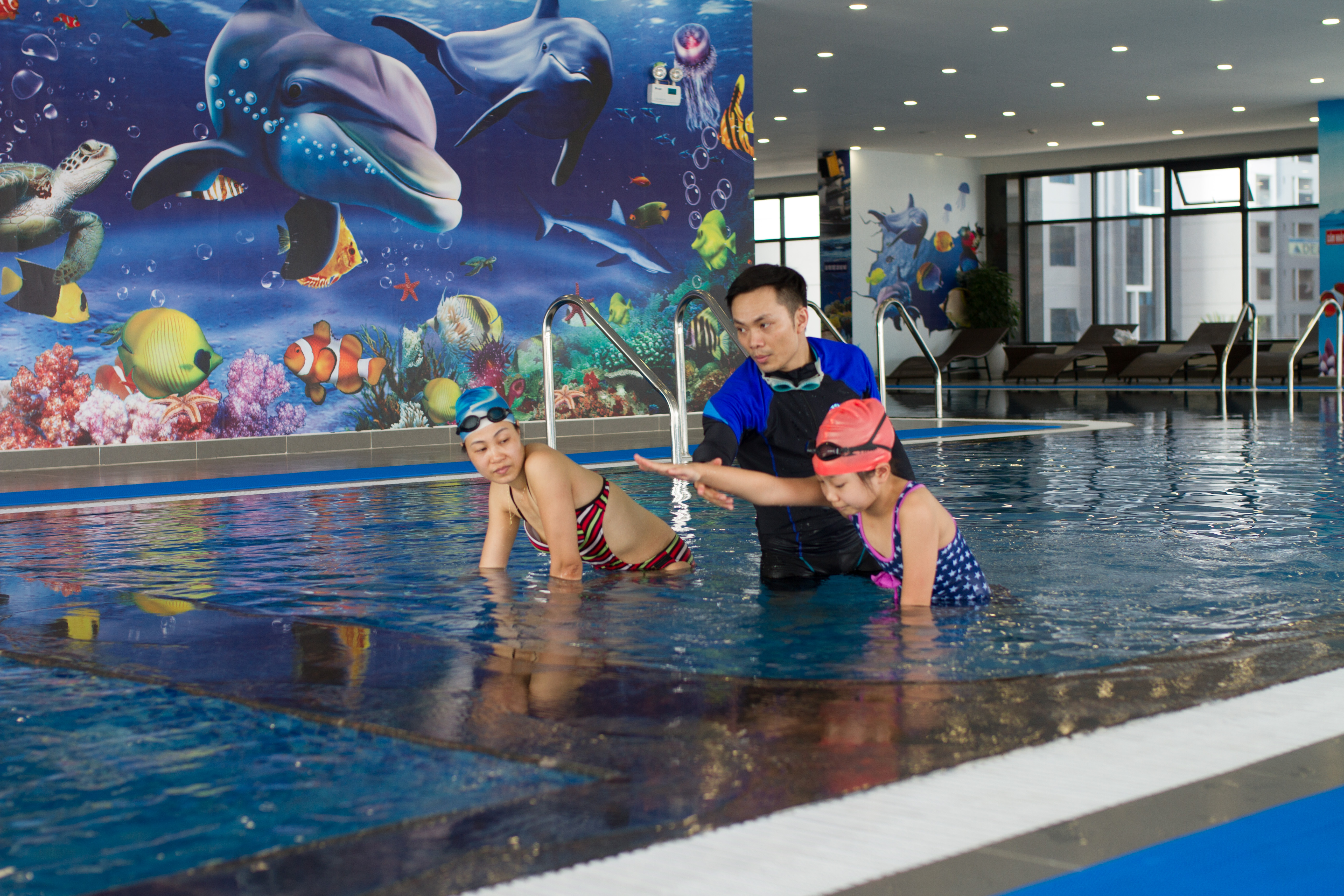
What is Freestyle? The King of Swimming Strokes
Freestyle, officially known as the Front Crawl, is the fastest and most efficient of the four primary swimming styles. In swimming competitions, "freestyle" actually designates a category where swimmers can choose any stroke, but they invariably choose front crawl due to its unrivaled speed.
Freestyle features a streamlined face-down posture, alternating hand sweeps, continuous flutter kicks, and a side-breathing pattern. It requires a higher degree of coordination and breath control than Breaststroke, but offers superior speed and cardiovascular conditioning.
At Swim For Life Vietnam, we usually teach freestyle after the student has acquired the basics of Breaststroke. According to HLV Nguyen Huy Manh: "Freestyle is all about reducing resistance. Once you learn to rotate your body smoothly and keep your head low, you will slide through the water with minimal effort. Our private coaching gets students swimming freestyle smoothly in 8-12 lessons."
Health Benefits of Freestyle Swimming
Freestyle swimming is a premier cardiorespiratory workout with outstanding benefits:
- Maximum Calorie Burn: Burning 500-700 calories per hour, freestyle is highly effective for weight management and metabolic conditioning.
- V-Shape Muscle Development: It primarily targets the latissimus dorsi (back), deltoids (shoulders), chest, triceps, and core muscles, sculpting a lean, toned physique.
- Spine Decompression: The elongated horizontal posture and smooth rotation help stretch and decompress the spine, relieving back pain for office professionals.
- Cardiovascular Fitness: Controlled rhythmic breathing builds superior lung capacity and aerobic endurance.
Body Position and Rotation (Body Roll)
Good body alignment is the secret to an effortless freestyle stroke. It centers on three key concepts:
1. Streamlined Posture
Keep your body as flat and horizontal as possible. Look straight down at the pool bottom. The waterline should cut across the middle of your head. If you lift your gaze forward, your hips will immediately sink, causing massive drag.
2. Hip and Shoulder Rotation (Body Roll)
Do not swim flat on your stomach. As each arm reaches forward, rotate your shoulders and hips 30-45 degrees to that side. This rotation allows you to reach further, engage your powerful back muscles, and breathe without straining your neck.
3. Core Engagement
Keep your abdomen tight. Your core acts as the rigid axle connecting your upper-body pulling force to your lower-body kicking stability. A loose core causes your hips to wiggle side-to-side, acting like a brake.
The Flutter Kick: Power from the Hips
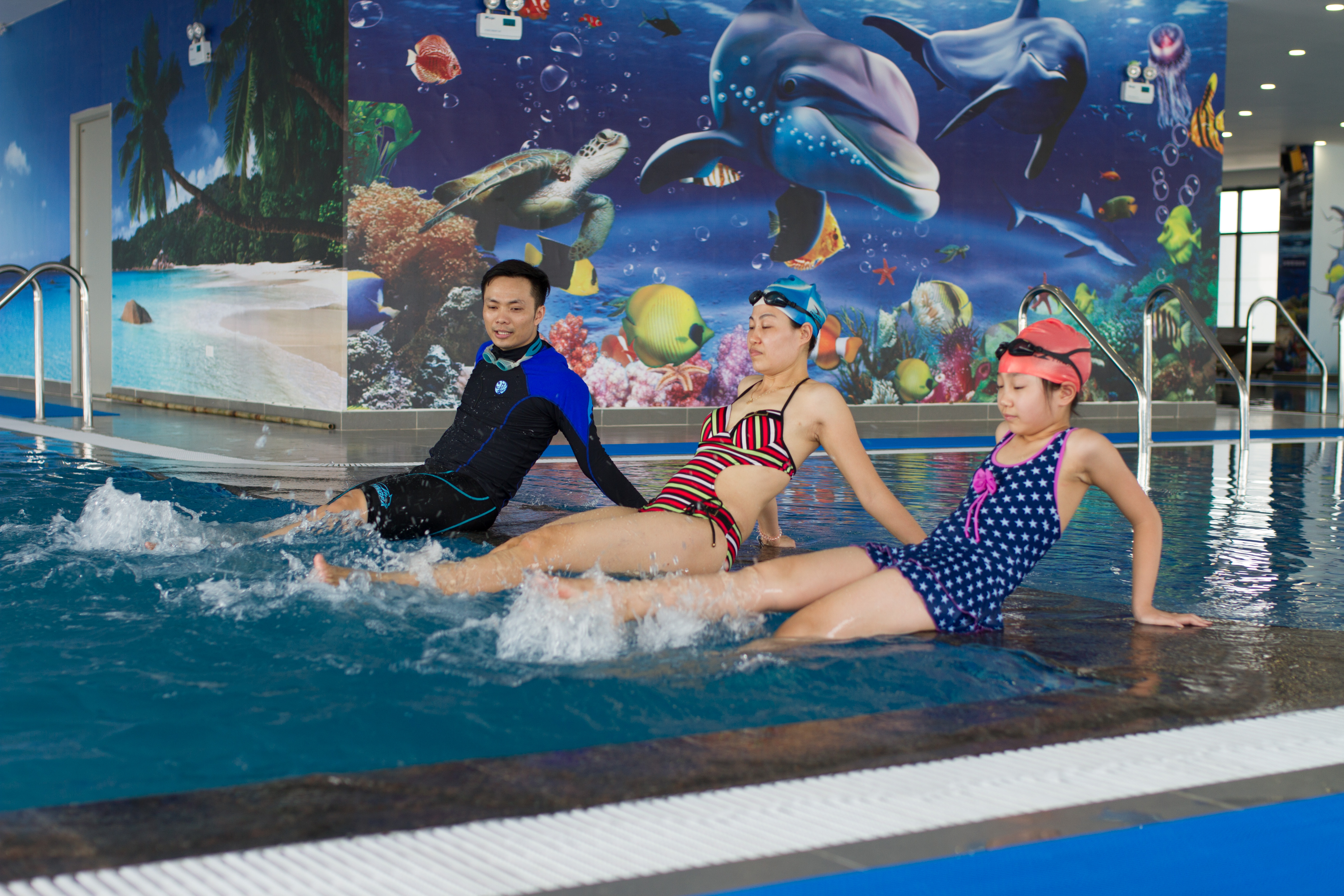
The flutter kick maintains body position, raises your hips, and provides consistent balance. It must be executed correctly to avoid wasting energy:
- Kick from the Hips: Initiate the kick from your hip joints and thighs, not by bending your knees. A knee-driven kick creates drag and tires you out quickly.
- Relaxed Ankles (Floppy Feet): Keep your ankles completely loose and toes pointed. Your feet should act like flexible flippers, whipping the water.
- Small Amplitude: Keep your kicks narrow. The distance between your heels should only be about 30-40 cm. Large kicks create frontal resistance.
The Arm Stroke: Catch, Pull, Push, and Recover
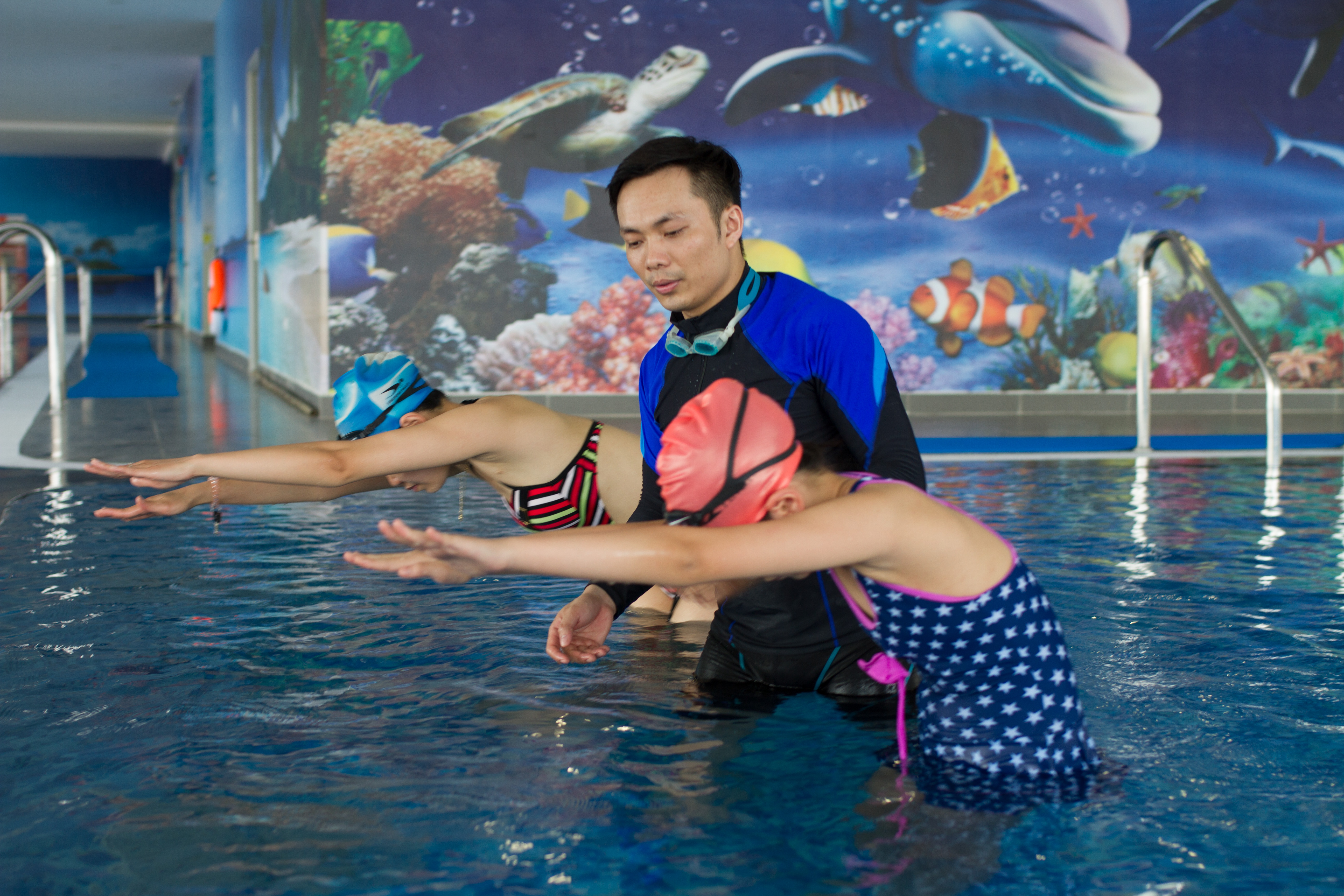
Alternating arm pulls provide 90% of your propulsion. Each arm cycle has four phases:
1. Entry & Extension
Enter the water fingertips first, in line with your shoulder. Extend your arm forward beneath the surface (10-15cm deep) as your body rotates to that side.
2. High Elbow Catch
Initiate the catch by bending at the wrist and elbow, keeping the elbow high. This turns your hand and forearm into a vertical paddle facing backward.
3. Pull & Push
Pull your hand backward under the chest along the center line. As it passes your chest, transition into a powerful push backward past your hip. Accelerate the hand through this phase.
4. Recovery
Lift your elbow out of the water first. Vung your hand forward close to the water surface, keeping the shoulder and wrist relaxed, preparing for the next entry.
Side Breathing: The Bow Wave Principle
Breathing in freestyle requires rotation, not lifting. We utilize the physics of the **Bow Wave**:
As you swim forward, your head pushes water away, creating a wave in front of your forehead and a pocket of air (a trough) along your cheek. To breathe, simply rotate your head slightly along with your body roll. Keep one goggle lens underwater and open your mouth in the air pocket to inhale quickly. Turn your face back down immediately and exhale slowly through your nose.
Putting It All Together: 6-Beat Kick Rhythm
In standard freestyle, we use the **6-Beat Kick**: 6 kicks (3 per side) for every 2 arm strokes (1 full cycle). This provides excellent balance and speed.
| Phase | Right Arm | Left Arm | Kicks | Breathing |
|---|---|---|---|---|
| Phase 1 | Entry & Glide | Push & Recover | 3 kicks (L-R-L) | Exhaling under water |
| Phase 2 | Catch & Pull | Entry & Glide | 3 kicks (R-L-R) | Rotate to Left to inhale |
Dryland Exercises for Freestyle
- Arm Rotation Practice: Stand, bend forward 45 degrees, and rotate one arm at a time, focusing on high elbow catches and recoveries.
- Plank with Shoulder Taps: Build core strength and shoulder stability needed for continuous pulling.
- Flutter Kick on Bench: Lie face down on a bench and practice kicking from the hips with floppy ankles.
Pool Drills for Skill Progression
- Side Kick Drill: Kick on your side with one arm extended forward and face down. Turn head to breathe. Helps practice side breathing and body alignment.
- Single Arm Drill: Keep one arm at your side or extended on a kickboard while quating with the other. Focuses on proper catch and pull mechanics.
- Catch-Up Drill: Keep both hands extended forward. One arm performs a full cycle, returns to the front and taps the other hand before the other arm starts. Builds excellent glide timing.
Professional Freestyle Courses at Swim For Life
Swim For Life offers high-quality freestyle coaching tailored to your needs. If you want to swim faster, increase your stamina, or correct your posture, our coaches are here to help.
Why Choose Our Private Classes?
- 1-on-1 Personalized Coaching: HLV with professional certifications from physical education universities.
- Time & Location Flexibility: Schedule sessions around your busy work life at premium pools near you.
- Scientific Progress Tracking: Tailored underwater video analysis to fine-tune your biomechanics.