🦋 Most Athletic & Powerful Stroke

Butterfly: Detailed Technique Guide

Butterfly is the most visually stunning yet physically demanding stroke, utilizing a continuous dolphin body wave and symmetrical arm recovery. Learn it with Swim For Life.

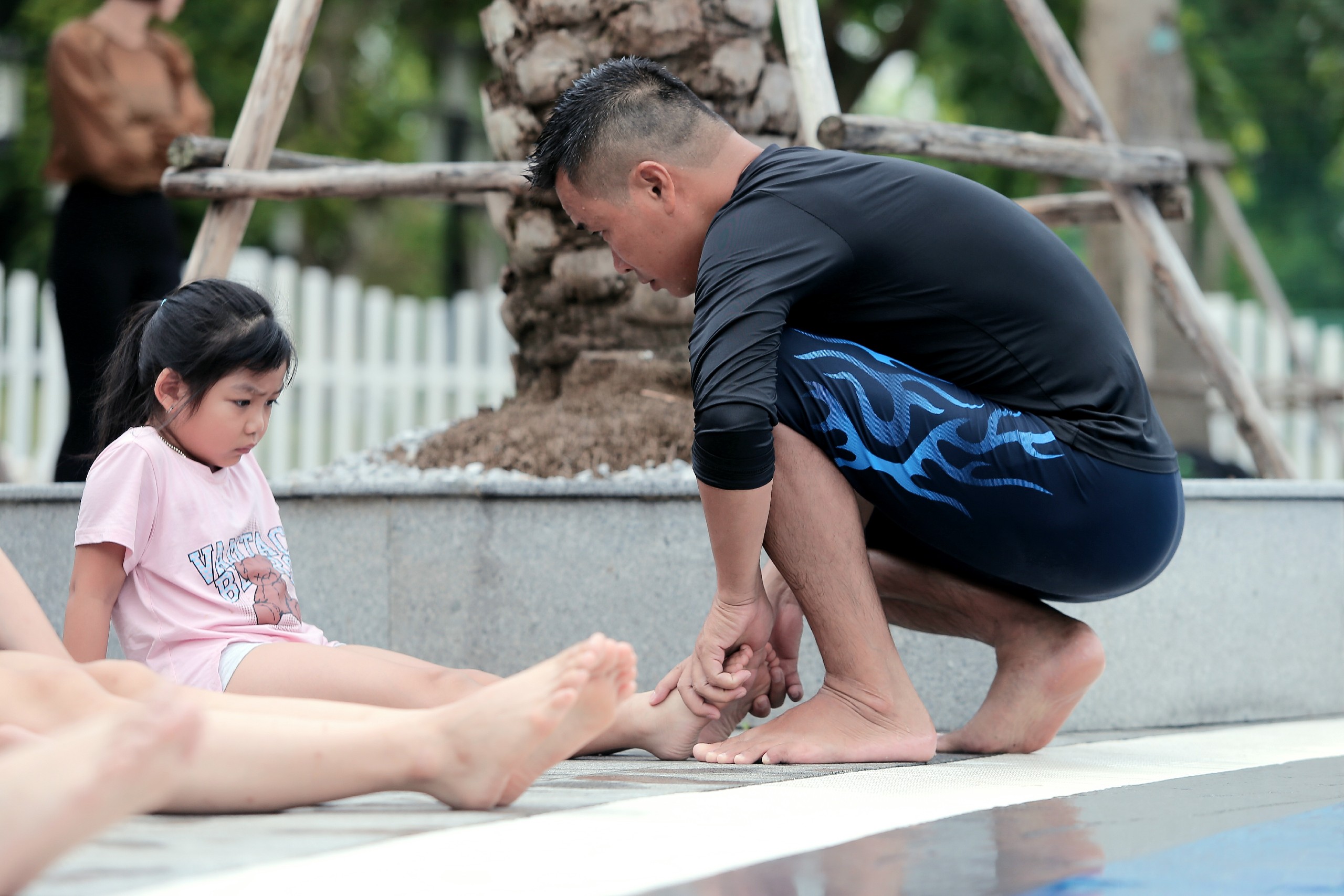
HLV Swim For Life chỉnh sửa kỹ thuật uốn sóng thân cho học viên học bơi bướm
4/4
Difficulty Advanced
Speed Very fast
🔥
Calories 700 - 800 kcal/h
💪 Target Muscles
CoreLatsShouldersChestBicepsGlutes
Swimming Science

Biomechanics Analysis

Click or hover over the glowing hotspots on the swimmer's body to view core technique details.

🗣️

Head & Breathe

Early chin lift

Lift head early to breathe when arms begin the backward push. Avoid lifting too high which sinks hips. Your head must enter the water before your arms.

What is the Butterfly Stroke? The Dolphin Wave

The Butterfly Stroke is the second fastest competitive swimming style, celebrated for its spectacular dolphin-like body waves and powerful, symmetrical arm recoveries. It is the most advanced and physically demanding stroke, requiring core strength, spinal flexibility, and precise coordination.

Biomedically, butterfly relies on a continuous kinetic chain wave that travels from the head, down the spine, and is released through the feet. It was developed in the 1930s as a variation of breaststroke and became an official Olympic event in 1952.

At Swim For Life Vietnam, we teach butterfly as an advanced course. HLV Nguyen Huy Manh notes: "Butterfly is a rhythm stroke. If your timing is right, the water lifts you up. We teach students to connect the dolphin wave with the arm sweeps, making the movement feel fluid and graceful rather than exhausting."

Health Benefits of Butterfly

Butterfly is the ultimate total-body conditioning stroke:

  • Maximum Calorie Burn: Burning up to 800 kcal/hour, it leads all strokes in metabolic expenditure and fat reduction.
  • Core Powerhouse: The continuous dolphin kick activates the rectus abdominis, obliques, and lower back muscles, building a strong core.
  • Shoulder & Chest Development: The symmetrical recovery expands chest flexibility and builds strength in the upper back and shoulder girdle.
  • Spinal Mobility: The wave motion promotes flexibility and articulation in the thoracic and lumbar spine.

The Dolphin Kick and Body Wave

The **Dolphin Kick** is the engine of the butterfly stroke. Keep legs together and move them as a single flipper:

  • Wave Origin: The wave does not start at the knees; it begins at the chest. Press your chest down into the water, which naturally pushes your hips up.
  • The Downward Whip: Whip your legs down by flexing your hips. Keep ankles relaxed to snap the water.
  • Double Kick Rhythm: You must kick twice per arm cycle:
    • Kick 1 (Entry): Kicking as hands enter the water to raise the hips.
    • Kick 2 (Exit): Kicking as hands push past the thighs to lift the chin for breathing.

The Arm Stroke: The Keyhole Pattern

Both arms move simultaneously under the water in a keyhole-like path:

  1. Entry: Hands enter thumb-first, shoulder-width apart, fingers slightly angled outward.
  2. Sweep & Catch: Sweep hands outward, then pull them inward under your chest (drawing the top of a keyhole). Keep elbows high.
  3. Push: Push hands forcefully backward past the hips. Accelerate through this phase to generate maximum speed.
  4. Recovery: Sweep arms wide and low over the surface. Thumbs point down, shoulders and wrists relaxed.

Breathing Timing in Butterfly

Breathing requires perfect synchronization: **Head rises before hands, head drops before hands.**

  1. Start lifting your chin forward as hands sweep inward under the chest.
  2. Inhale quickly through your mouth as the second kick lifts your shoulders. Keep your chin low, scanning the surface.
  3. Submerge your face before hands enter the water in front. Exhale slowly under water.

Stroke Coordination Chart

Phase Arm Action Leg Action Breathing
1. Entry Hands enter shoulder-width Kick 1 (Down) Face submerged, start exhale
2. Catch & Pull Sweep inward under chest Legs rise up straight Exhaling under water
3. Push Push hard past thighs Kick 2 (Down) Lift chin to inhale quickly
4. Recovery Sweep arms wide over water Legs rise up straight Face enters before hands touch

Master Butterfly at Swim For Life

Ready to master the most athletic swimming stroke? Our 1-on-1 private lessons at Swim For Life help you build the strength, timing, and flexibility needed to swim butterfly with grace.

What We Offer:

  • Customized Wave Drills: Structured lessons focusing on spinal articulation and chest pressing.
  • Rotator Cuff Protection: Learn to recover your arms without straining your shoulder joints.
  • Flexible Scheduling: Arrange sessions at premium pools across Hanoi and HCMC.

Troubleshooting

Common Mistakes & Corrections

Avoid these common mistakes to swim correctly, conserve energy, and improve your efficiency.

Common Mistake & Wrong Posture ❌ Correct Technique & Fix ✅
⚠️ Mistake 1: Bending knees too much (Kicking like breaststroke)

Drawing knees forward creates enormous frontal drag, sinking the hips and halting forward momentum.

Correct Fix:

Focus on initiating the dolphin wave from the chest and hips. Keep knees long and relaxed; let ankles flick the water.

⚠️ Mistake 2: Late breathing (Breathing during recovery)

Trying to breathe when arms are recovering over the water drops the chest, stops momentum, and leads to swallowing water.

Correct Fix:

Lift your chin to breathe early—during the inward sweep and push phase. Head must submerge before arms enter.

⚠️ Mistake 3: Stiff shoulders during arm recovery

Tensing shoulders and arms during recovery creates high fatigue and strains the rotator cuff.

Correct Fix:

Relax wrists and shoulders. Use the momentum of the push phase to swing arms wide and low over the water.

⚠️ Mistake 4: Missing the second dolphin kick

Kicking only once per cycle causes the hips to sink during the push phase, making arm recovery extremely heavy.

Correct Fix:

Perform the second downward kick exactly as hands finish pushing past the hips. This lifts the upper body naturally.

Book a Lesson

Train with Professional Coaches

Sign up for a FREE trial lesson with a 1-on-1 private coach at Swim For Life Vietnam today.

Swim For Life Vietnam

We guarantee 100% results after a 10-12 session course. Dedicated 1-on-1 private coach in the water, personalized lesson plan tailored to individual fitness.

*(Specify District or Pool Name so we can arrange the nearest schedule)
Giải đáp thắc mắc

Câu Hỏi Thường Gặp

Trả lời các câu hỏi phổ biến của học viên về việc tập luyện kỹ thuật Butterfly.

Still have questions?

Feel free to contact our Lead Coach directly for support.

📞 Call: 0979.121.097

Yes, butterfly is widely considered the most difficult and physically demanding swimming stroke. It requires exceptional core strength, shoulder flexibility, and precise timing. However, when taught step-by-step with private coaching, most swimmers can master the basic rhythm in 10-12 sessions.

We strongly advise against learning butterfly as your first stroke. Swimmers should have a solid foundation in breaststroke and freestyle first. Knowing how to breathe, float, and coordinate other strokes makes learning the dolphin kick and arm recovery much safer and faster.

Shoulder strain occurs when you try to lift your arms out of the water using pure shoulder muscle. Instead, rely on the double dolphin kick. The second kick (when hands push back) creates an upward thrust that naturally raises your shoulders, making arm recovery effortless.

A flutter kick (freestyle) is an alternating up-and-down movement of the legs. A dolphin kick (butterfly) requires both legs to be held together and whipped down simultaneously in a continuous body wave that starts from your chest and moves down to your toes.

Butterfly is the king of fat-burning swimming strokes, burning between 700 - 900 calories per hour. Because it engages the entire core and lower back continuously, it is highly effective for core strengthening and calorie expenditure.